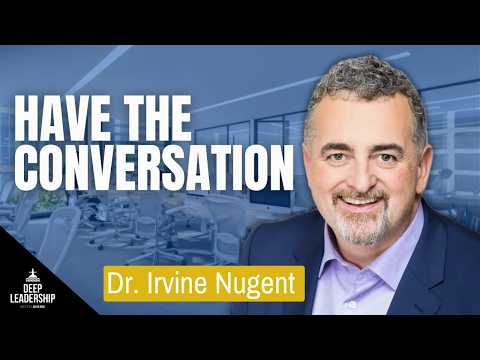
Workplace Conflict Starts Inside the Leader | Ep. 106
Dr. Irvine Nugent joins Coach Mo on the Let’s Think About It Podcast for a conversation about workplace conflict, self-awareness, and what happens inside us before a difficult conversation ever begins.
Conflict is often viewed as something that happens between people. But before conflict becomes visible, leaders may already be experiencing an internal struggle: anticipating what could go wrong, questioning what to say, worrying about damaging a relationship, or creating stories about how another person will respond.
In this conversation, Irvine explains why developing greater awareness of that internal experience is an important part of becoming more effective in conflict.
Drawing on his personal experience growing up during the Troubles in Northern Ireland, his years as an organizational leader, and his work with leaders and teams, Irvine discusses why the goal should not always be to eliminate conflict. Instead, leaders can develop greater Conflict Capacity™—the ability to remain present, deliberate, and constructive when tension rises.
### Topics Explored
* Why conflict often begins internally before it becomes interpersonal
* How anticipation can make difficult conversations even harder
* Why we tend to imagine what could go wrong
* The role of self-awareness in responding to conflict
* How emotions, stories, physical signals, and triggers influence behavior
* Why leaders don't need the perfect words before entering a difficult conversation
* The importance of recognizing and repairing mistakes during conversations
* Why conflict avoidance can undermine trust within teams
* How leaders can become more comfortable staying with tension
* The relationship between emotional intelligence and workplace conflict
* Why the presence a leader brings into a conversation matters
### Questions Explored in This Conversation
What is Conflict Capacity™?
Conflict Capacity is the ability to remain present, deliberate, and constructive when disagreement, friction, or emotional tension rises. Rather than automatically avoiding conflict or pushing harder, leaders develop greater capacity to stay engaged and choose how they respond.
Why can conflict begin before anyone says anything?
People often anticipate difficult conversations before they happen. They may imagine negative outcomes, worry about damaging relationships, question their own competence, or create stories about another person's intentions. That internal dialogue can influence how they enter the conversation before a word is spoken.
How does self-awareness help leaders manage conflict?
Self-awareness helps leaders recognize their emotions, physical signals, internal stories, triggers, and habitual responses. Recognizing those patterns creates greater opportunity to choose a response instead of simply reacting.
Do leaders need to know exactly what to say before a difficult conversation?
No. Trying to find the perfect words can become another form of avoidance. Difficult conversations are inherently unpredictable. Leaders need enough confidence to enter the conversation, remain attentive to its impact, and repair the interaction when something doesn't land as intended.
Why is avoiding conflict harmful to teams?
When important issues repeatedly go unspoken, people can begin to believe that their perspectives don't matter or that raising concerns isn't worth the risk. Over time, avoidance can undermine trust and make constructive disagreement even more difficult.
What role does emotional intelligence play in workplace conflict?
Emotional intelligence helps people notice what is happening within themselves and recognize what may be happening for others. That awareness is especially valuable under pressure because conflict can narrow attention and make habitual reactions more likely.
### About Dr. Irvine Nugent
Dr. Irvine Nugent, CSP, is a keynote speaker, executive coach, workplace mediator, and co-founder of Conflict EQ®. His work focuses on helping leaders and organizations strengthen their capacity to navigate workplace conflict, difficult conversations, disagreement, and leadership pressure.
His approach brings together the science and skill of conflict with emotional intelligence to help people remain constructive when tension rises.
Featured on: Let’s Think About It Podcast with Coach Mo